
Hello there,
How’s your embodied purpose journey unfolding? This week, I’m thinking about something essential: the gap between understanding your purpose and actually living it.
You can have perfect clarity about your values, beautiful awareness of what brings you alive, and deep understanding of where you’re misaligned—and still not change anything. Because awareness without action remains potential.
This week, we explore how to translate purpose awareness into daily practice. Not through grand gestures or complete life overhauls, but through small consistent choices that honour your authentic self.
Morning as Foundation
Your day begins long before your first task or obligation. It begins with the first moments after waking—and those moments set everything that follows.
Most people reach for their phone before even getting out of bed. They dive into other people’s priorities, demands, and energy before they’ve connected with their own. Email. News. Messages. Social media. Within minutes, their attention has been completely captured by external input.
Then they wonder why the entire day feels reactive, overwhelming, and disconnected from what actually matters.
I worked with Jennifer, who described feeling perpetually behind despite working constantly. When we examined her morning, she was checking work email in bed, scrolling news while making breakfast, answering texts while getting ready. She’d given away her entire morning—and with it, her intentional focus—before ever checking in with herself.
We redesigned her first five minutes. Simple practice: Before touching her phone, she’d sit with her morning coffee, place her hand on her heart, take three deep breaths, and ask “What matters most to me today?” Then identify one way to honour that.
Five minutes. That’s all. But those five minutes transformed her entire experience. She moved from reactive to intentional. From overwhelmed to purposeful. From living everyone else’s priorities to honouring her own.
The practice didn’t add anything to her schedule. It reclaimed her morning from automatic patterns and gave her back her intentional focus.
Try this yourself this week: Set your alarm five minutes earlier if needed. Before checking your phone—before anything else—take five minutes for purpose connection.
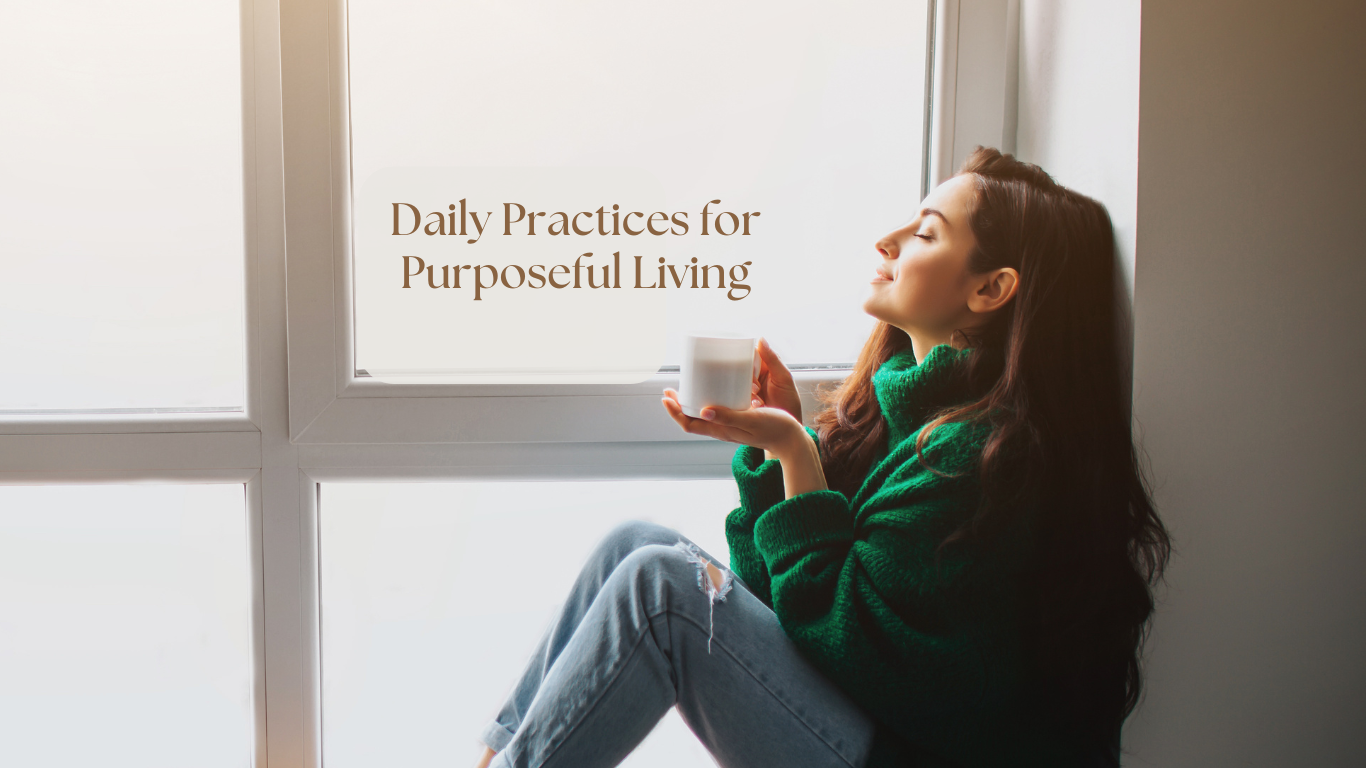
Sit somewhere comfortable. Coffee or tea optional but lovely. Hand on heart. Three slow breaths. Ask yourself: “What matters most to me today? How can I honour that in one small way?”
Let the answer guide your day’s choices.
Five minutes of morning intention can reclaim an entire day from reactive overwhelm.
Decision Filter for Daily Choices
Every decision you make either moves you toward your purpose or away from it. The challenge? Most decisions don’t feel that significant in the moment.
Say yes to one more committee. Skip your nourishing practice because you’re too busy. Choose the path that looks impressive over the one that feels authentic. Accept an invitation you don’t want because you feel obligated.
Small choices. Cumulative impact. Thousands of small decisions that, over time, either build a life aligned with your purpose or pull you further from it.
Rachel couldn’t understand why she felt so disconnected from her purpose despite “really trying to live intentionally.” But when we examined her actual decisions—how she spent her discretionary time, what she said yes to, where she directed her energy—they consistently chose external approval over authentic alignment.
She’d volunteer for positions she didn’t care about because they looked good on paper. Skip her painting practice (which she loved) for social obligations she didn’t enjoy. Choose the impressive path over the authentic one in dozens of daily decisions.
No wonder she felt disconnected. Her stated values and her actual choices were completely misaligned.
We created a simple decision filter she could use before saying yes to anything:
1. Values alignment: Does this align with my core values?
2. Energy assessment: Will this bring me more alive or deplete me?
3. Motivation check: Am I choosing this from fear or from purpose?
4. Authentic choice: What would my most aligned self-choose?
This filter transformed her life. Not through dramatic changes, but through thousands of small decisions that honoured her authentic purpose instead of external expectations.
She started declining committee positions that didn’t align with her values. She protected her painting practice as fiercely as she’d previously protected external obligations. She said no to invitations driven by guilt or obligation. She chose authentic over impressive.
Her life didn’t look as busy or impressive to others. But it felt infinitely more purposeful to her.
Try using this filter this week. Before saying yes to requests, commitments, opportunities, or invitations, pause and ask these four questions. Let them guide your choices.
Your daily decisions create your life. Make them consciously.
Your Purpose People
Living purposefully doesn’t happen in isolation. The people around you significantly influence your ability to honour your authentic self.
Some people genuinely celebrate your growth and support your purposeful living. Others—often unconsciously—resist your changes because they’re comfortable with who you’ve been and threatened by who you’re becoming.
This isn’t about judging your relationships as good or bad. It’s about honest awareness of who supports your authentic expression and who subtly (or explicitly) discourages it.
When Marcus started living more aligned with his purpose, he noticed different responses from people in his life. He left his high-stress corporate role for work that honoured his values. He set boundaries around his time and energy. He said no to obligations that didn’t align with his authentic self.
Some friends celebrated these changes. They told him he seemed more alive, more himself, happier despite the external changes looking like “steps backward” on paper.
Other friends made subtle and not-so-subtle comments: “Must be nice to not care about career advancement anymore.” “You’re becoming kind of selfish, don’t you think?” “You’ve changed, and honestly, not in a good way.”
These weren’t bad people. But they were invested in the old Marcus who sacrificed his authentic self for external approval and conventional success. The new Marcus—living according to his own values—triggered their discomfort about their own choices.
Marcus learned to seek support and connection from people who celebrated his growth while creating loving distance from those who needed him to stay unchanged. This wasn’t abandoning relationships—it was being honest about which relationships actually supported his purposeful living.
This week, notice with curiosity: Who in your life genuinely supports your authentic expression? Who inspires you toward purposeful living? Who feels threatened when you grow? Who subtly discourages changes that don’t align with their comfort?
This awareness helps you invest your relational energy wisely—deepening connections that support your purpose while creating appropriate space from those that don’t.
Your growth doesn’t require everyone’s approval or understanding. Just your commitment and the right support.
Boundaries as Purposeful Practice
Boundaries aren’t walls that keep people out. They’re clarity about what honours your purpose and what doesn’t.
Many people avoid setting boundaries because they’ve internalized the message that boundaries are selfish, mean, or unloving. So they say yes when they mean no. They tolerate behaviour that doesn’t align with their values. They sacrifice their own needs to keep others comfortable. They let their time and energy be consumed by others’ priorities.
Then they feel resentful, depleted, and disconnected from their purpose. And they blame themselves for not being “strong enough” or “disciplined enough” to maintain purposeful living.
But the issue isn’t strength or discipline. It’s boundaries.
Lisa felt perpetually overwhelmed by others’ demands on her time and energy. Her mother called multiple times daily with crises Lisa was expected to solve. Friends assumed she’d drop everything to help with their needs. Colleagues treated her schedule as infinitely flexible.
Lisa believed setting boundaries would be selfish or mean. But her resentment was growing. She was exhausted, disconnected from her own purpose, and starting to genuinely dislike the people she was constantly “helping.”
When she finally established boundaries—one scheduled check-in call with her mother daily instead of constant crisis management, advance notice required for friend requests instead of immediate availability, work hours she actually protected instead of infinite flexibility—something unexpected happened.
Her relationships improved.
Without resentment poisoning every interaction, she could be genuinely present when she chose to engage. Her mother learned to solve more problems independently, which actually built her confidence and capability. Friends who respected the boundaries found their connection with Lisa deepened—the time they had together was higher quality. Colleagues who learned to plan ahead found that everyone’s effectiveness improved.
Boundaries weren’t selfish. They were honest. And honesty created healthier, more sustainable relationships than resentful accommodation ever had.
What boundary have you been avoiding that would honour your purpose and actually improve your relationships?
This Week’s Practice
As you move through this week, I invite you to implement these daily purposeful practices:
1. Morning Intention: Five minutes before checking your phone. Hand on heart. “What matters today? How can I honour that?”
2. Decision Filter: Before saying yes to anything, ask: Does this align with my values? Will this energize or deplete me? Am I choosing from fear or purpose? What would aligned me choose?
3. Relationship Awareness: Notice who supports your authentic growth and who resists it. Invest energy accordingly.
4. Boundary Practice: Identify one boundary you need to establish. Practice saying no to what doesn’t honour your purpose so you can say yes to what does.
Remember, purposeful living is built through accumulated daily choices, not occasional grand gestures. You’re developing the practice of choosing alignment over approval, authentic over impressive, purpose over obligation.
Notice with gentle honesty this week:
• How does morning intention shift your daily experience?
• What patterns emerge when you use your decision filter?
• Who genuinely supports your purposeful living?
• What boundary would most honour your authentic self?
Join the Journey
I’m sharing regular practices and support across Instagram, Facebook, and LinkedIn throughout February. Follow along for ongoing guidance as you translate purpose awareness into daily living.
I’d love to hear how these practices are working for you. What’s shifting when you begin your day with intention? How is your decision filter guiding your choices? What are you discovering about your support system? Share your journey.
Your life is your greatest creative work. Let’s create it together—one conscious choice at a time.
With warmth,
Gemma-Lee
About the Author:
Gemma-Lee Harvey is a Holistic Counsellor and Lifestyle Coach based on Australia’s Sunshine Coast. With a diverse background spanning psychology, business, counselling, and coaching, she creates a nurturing space for exploring one’s full potential. Her gentle yet practical approach kindles the transformative spirit within, guiding individuals through life’s challenges as they rise through empowerment.
Contact:
🌐 www.phynixbydesign.com.au
☎ 07 5493 6742
📱 0448 562 814
🏢 Brightwater Wellness Hub, Shop 7E 69-79 Attenuata Drive, Mountain Creek QLD 4557
Opening hearts & facilitating transformations since 2017
Phynix By Design ~ Life Reignited