
Hello there,
How’s your implementation going? I’m thinking of you as you navigate the reality of putting intentions into practice. This week, we’re exploring something essential for long-term success: the art of flexible persistence.
Here’s what I’ve seen from years of supporting people in creating lasting change: rigid goals break under pressure, while flexible goals bend and grow. The key isn’t avoiding adjustments – it’s making them skilfully while maintaining commitment to what matters most.
The Flexibility Paradox
Many people believe that flexibility undermines commitment. They think that adjusting their approach means they’re failing or giving up. So they cling rigidly to original plans even when those plans clearly aren’t working.
But here’s the paradox: flexible commitment is actually stronger than rigid adherence. It allows you to maintain your core intentions while adapting your approach to reality.
I think of someone I worked with – let’s call her Maria – who set a goal to practice yoga daily. For three weeks, she maintained perfect consistency. Then her son got sick, work deadlines hit, and her rigid daily practice became impossible. She saw this as failure and abandoned the practice entirely.
When we reconnected months later, we redesigned her approach with flexibility built in: yoga 5x weekly (allowing two flexible days), 20-minute sessions as standard with 10-minute option for busy days, home practice primarily with studio classes when available.
This flexible structure sustained her practice through all life’s variations. She practiced more consistently over the year with flexibility than she ever had with rigidity.
Four Keys to Flexible Persistence
1. Daily Practice With Adaptation
Your daily practices either support or undermine your goals. But “daily” doesn’t mean rigid sameness – it means consistent presence with intelligent adaptation.
David (from last week) designed his leadership development as protected Tuesday/Thursday morning time. But some weeks, urgent work legitimately needed that time. Rather than abandoning his practice, he adapted:
Optimal practice: 45 minutes Tuesday/Thursday mornings
Plan B: 20 minutes one morning + podcast during commute
Plan C: 15 minutes of reading before bed three nights
Minimum viable: 5-minute reflection on leadership challenge Friday afternoon
His flexible approach maintained consistent development through varying circumstances. Over the year, he probably completed Plan A 60% of the time, Plans B-C 35% of the time, and minimum viable 5% of the time. That’s far better than the zero practice that would have resulted from rigid all-or-nothing thinking.
Design your flexible practice tiers:
• Optimal practice (when life cooperates)
• Adapted practice (when obstacles arise)
• Minimum viable practice (for genuinely difficult times)
The goal isn’t executing your optimal practice every time. It’s maintaining connection to your intention regardless of circumstances.
2. Progress Tracking That Celebrates Reality
What gets tracked and celebrated gets repeated. But many people track progress in ways that set them up for discouragement.
Rachel tracked her walking goal with refreshing honesty:
Week 1: Walked 3x (goal was 4x) – CELEBRATED showing up 3x instead of criticizing missing one
Week 2: Walked 5x (exceeded goal) – CELEBRATED momentum without expecting this every week
Week 3: Walked 2x (son’s illness) – CELEBRATED maintaining connection despite challenge
Week 4: Walked 4x (back to goal) – CELEBRATED consistency returning
Her tracking acknowledged obstacles without making them excuses. She celebrated actual progress without diminishing achievements. Most importantly, she noticed patterns: walking felt harder on weeks she didn’t prep on Sunday, easier when she had accountability texts from her friend.
This kind of tracking informs rather than judges. It shows what’s working, reveals what needs adjustment, and celebrates every step forward.
Try this tracking approach:
Weekly Progress Check:
• Actions taken toward each goal
• Obstacles encountered and how you navigated them
• Wins to celebrate (even tiny ones)
• What you’re learning about yourself
• Adjustments to try next week
What are three wins – however small – from this past week?
3. Energy Management That Sustains
You only have so much energy available each day. Sustainable goal achievement requires managing it like the precious resource it is.
Maria discovered that her yoga practice felt impossible not because she lacked commitment but because her energy was depleted by tolerated drains: saying yes to every request, never taking breaks during intense workdays, scrolling social media when she needed rest.
Once she started managing energy intentionally, her practice became sustainable:
Energy protection:
• Declined optional commitments during work intensive periods
• Protected actual lunch breaks for recharging
• Replaced evening scrolling with restorative activities
• Built recovery time after demanding days
Energy alignment:
• Scheduled yoga when energy naturally higher (mornings)
• Used practice as recharge rather than depletion
• Adjusted intensity to match available energy
• Honoured need for rest without guilt
Your goals deserve your energy. But that means both using energy for what matters AND protecting it from what doesn’t.
Energy audit questions:
• What consistently drains your energy?
• What genuinely replenishes you?
• What energy stealer could you reduce this week?
• What energizer could you increase?
• What boundary would protect energy for your goals?
4. Compassionate Accountability
Accountability without compassion becomes punishment. Compassion without accountability enables drift. Both together create sustainable growth.
David built compassionate accountability into his leadership development through weekly check-ins with his mentor. But these weren’t interrogations – they were supportive conversations:
“What did you practice this week?” (acknowledgment)
“What got in the way?” (understanding obstacles)
“What did you learn?” (growth mindset)
“What’s one thing you’ll focus on this week?” (forward movement)
When he missed practices, his mentor responded with curiosity rather than criticism: “What does this tell us about what you need?” This question revealed that David needed earlier morning practice before reactive work began, shorter practices during deadline weeks, and better integration of learning into actual work situations.
Compassionate accountability treats obstacles as information, not indictment. It maintains commitment while adjusting approach.
Build your accountability:
• Who genuinely supports your growth?
• What specific support do you need?
• How will you maintain connection to intentions when you drift?
• What does compassionate return look like for you?
Your Week 3 Challenge
This week, I invite you to practice flexible persistence:
1. Create Flexibility Tiers: Design optimal, adapted, and minimum viable versions of your key practices
2. Track With Celebration: Note progress honestly, celebrate all wins, learn from obstacles
3. Audit Energy: Identify drains to reduce and energizers to increase
4. Build Compassionate Accountability: Connect with supportive person or create personal check-in practice
5. Practice Adaptation: When obstacles arise, adjust approach rather than abandoning goal
Remember, the goal is persistent connection to your intentions through all life’s variations, not perfect execution of rigid plans.
As you practice flexibility this week, notice with gentle awareness:
• When does adaptation feel like wisdom versus excuse?
• What helps you maintain connection to intentions during difficulty?
• Which practices are sustainable and which need adjustment?
• How does celebrating small wins affect your motivation?
Seasonal Wisdom
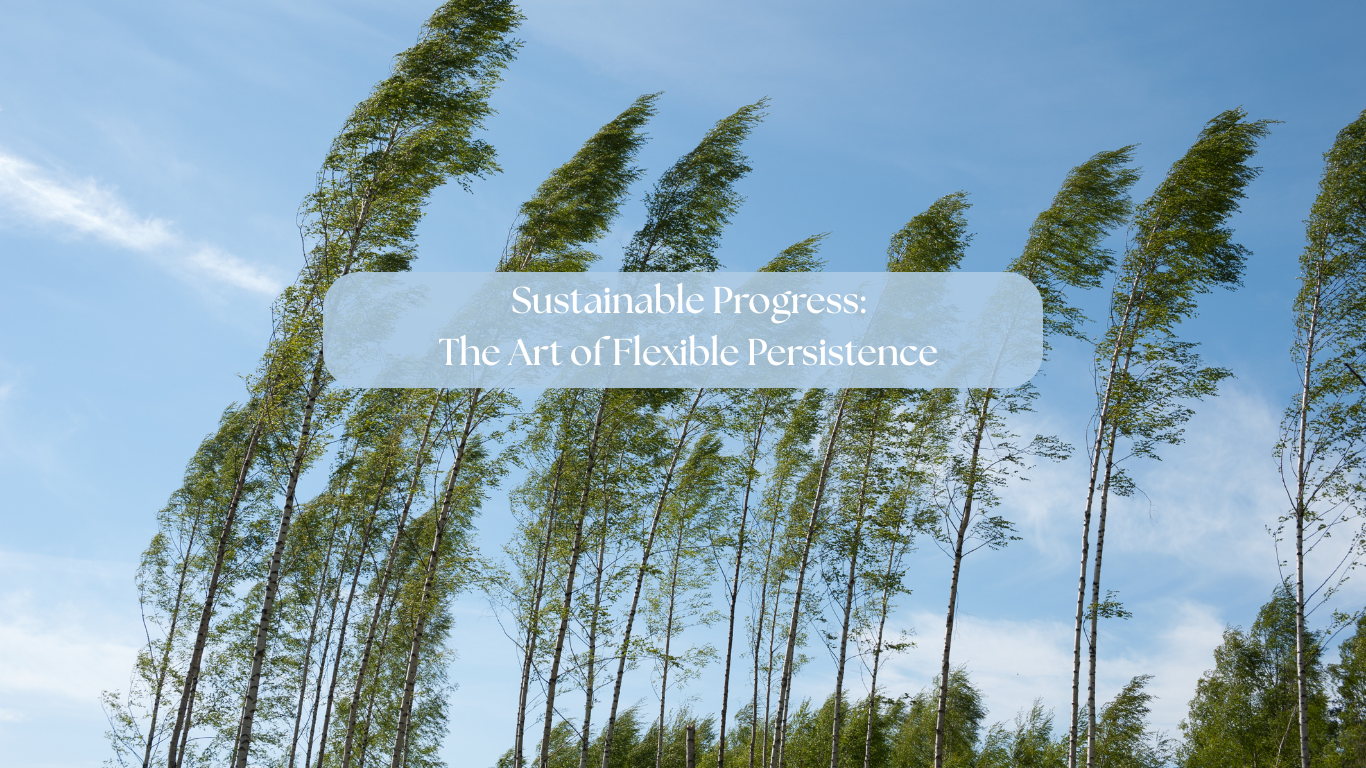
Summer teaches us about natural rhythms and cycles. Some days are stormy, others brilliantly clear. Plants don’t abandon growth during temporary storms – they bend, adapt, and continue reaching toward light. Some days bring perfect conditions for rapid growth, others require simply maintaining roots while weathering challenges.
Your transformation follows similar rhythms. Some weeks you’ll have ideal conditions for progress. Others will require adaptation and persistence through challenges. Both are natural and necessary parts of the journey.
Join the Journey
I’m sharing daily encouragement for flexible persistence on social media. Follow along on Instagram, Facebook, or LinkedIn for support in maintaining connection to your goals through all circumstances.
How is flexible persistence showing up in your journey? What adaptations are you making? What wins are you celebrating? What are you learning about sustainable change? Share your insights below or reach out directly.
The persistence that lasts is flexible, not rigid. You’re building sustainable transformation, not temporary intensity.
With respect for your persistent, adaptive commitment,
Gemma-Lee
About the Author:
Gemma-Lee Harvey is a Holistic Counsellor and Lifestyle Coach based on Australia’s Sunshine Coast. With a diverse background spanning psychology, business, counselling, and coaching, she creates a nurturing space for exploring one’s full potential. Her gentle yet practical approach kindles the transformative spirit within, guiding individuals through life’s challenges as they rise through empowerment.
Contact:
🌐 www.phynixbydesign.com.au
☎ 07 5493 6742
📱 0448 562 814
🏢 Brightwater Wellness Hub, Shop 7E 69-79 Attenuata Drive, Mountain Creek QLD 4557
Opening hearts & facilitating transformations since 2017
Phynix By Design ~ Life Reignited